
Art Styles & Painting
Turn Your Photo into an Oil Painting with AI — Museum-Quality Portrait
March 2026 · 5 min read
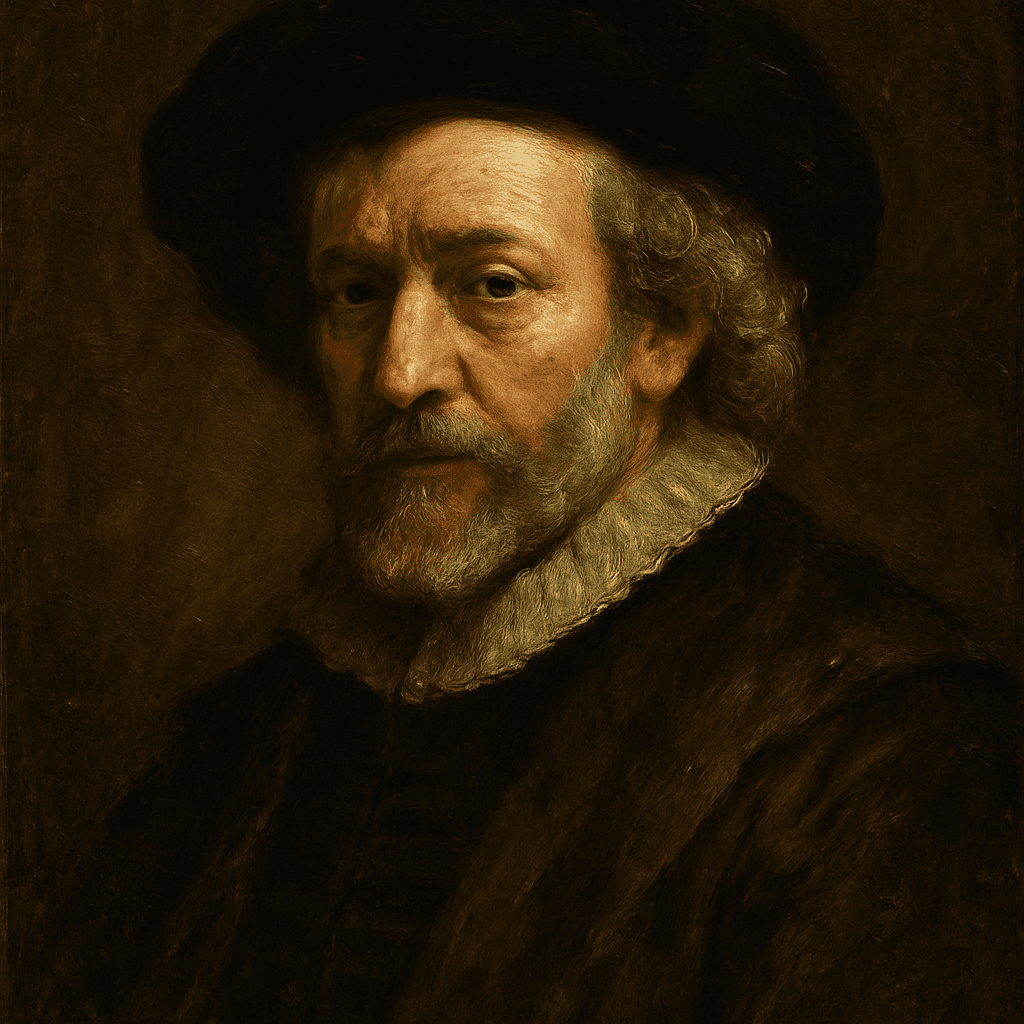
Oil painting has been the gold standard of portraiture for centuries — from Rembrandt to Vermeer. The rich deep colors, visible impasto brushwork, and dramatic chiaroscuro lighting create portraits of unmatched gravitas. A classical oil portrait communicates something that no photograph can: permanence, importance, the sense that this subject was worth the hours a master painter devoted to the canvas.
Now AI can transform any photo into a classical oil painting portrait in 60 seconds. No art skills required. The AI captures the defining qualities of the Old Masters — the dense, luminous color, the impasto texture where paint builds up on the canvas, the characteristic dark atmospheric background, and the Rembrandt-like chiaroscuro that carves light from shadow across a face — and applies them to your photo with the fidelity of a trained artist.
Whether you want a statement piece to hang in a home or office, an extraordinary gift for a milestone occasion, or simply the most commanding version of a portrait you love, the oil painting style turns it into something that belongs in a museum.
What You'll Need
- A photo of yourself, a family member, or anyone you want to paint in oils
- A clear, well-lit portrait — slightly dramatic lighting produces the best chiaroscuro effect
- Any web browser on any device (mobile, tablet, or desktop)
- About 60 seconds
Step-by-Step Guide
- 1
Go to minifigureai.com
Open minifigureai.com in any browser. Your first avatar is completely free — no account or credit card required. The style gallery loads immediately so you can browse sample oil painting outputs before uploading. - 2
Upload your photo
Drag and drop your photo onto the upload area, or tap to browse your files. JPG, PNG, and WEBP files up to 30MB all work. A clear portrait — whether a selfie, a professional headshot, or a family photo — gives the AI the most to work with. Slightly dramatic or side-angled lighting will produce the most striking chiaroscuro effect. - 3
Select "Oil Painting" from the style chips
In the style picker, choose Oil Painting. The chip shows a sample output so you know exactly what the style looks like before you commit. You can also browse Renaissance right next to it to compare the two classical art styles before generating. - 4
Wait about 30 seconds
The AI analyzes your photo and applies the oil painting transformation — building up rich impasto texture, establishing dramatic chiaroscuro lighting, deepening the color palette to the characteristic luminous intensity of Old Master oils, and setting the subject against a dark atmospheric background. Generation typically completes in 20–40 seconds. - 5
Download, share, or try another style
Once your oil painting portrait is ready, download the high-resolution PNG. Print it, frame it, or share it directly from the app. Hit Try Another Style to generate a Renaissance or Watercolor version from the same photo — comparing the classical styles side by side is one of the most popular ways to find the perfect treatment for your portrait.
Tips for the Best Results
- Dramatic side lighting creates the best chiaroscuro effect. Chiaroscuro — the strong contrast between light and shadow that defines Old Master oil portraits — requires directional light. If your photo has flat, even lighting, the AI will still produce a beautiful result, but a photo with one side of the face clearly lit and the other in shadow will yield the most dramatically Rembrandt-like output. Even a lamp slightly to one side makes a significant difference.
- Dark clothing echoes the Dutch Master aesthetic. Rembrandt, Vermeer, and their contemporaries typically painted their subjects in dark, rich clothing — deep blacks, burgundies, and forest greens — against dark atmospheric backgrounds. If your photo features a dark shirt, jacket, or top, the AI will integrate it seamlessly into the Dutch Master visual language. Bright or neon clothing can be stylistically jarring against the deep, classical palette.
- Older subjects get particularly stunning results. Classical oil portraiture celebrates character in a face — and the AI is particularly adept at rendering the texture and gravitas that comes with age. Lines, distinguished features, grey hair, and strong bone structure all translate beautifully into the Old Master style. Younger faces are equally compelling, but a portrait of someone in their 50s, 60s, or beyond often produces the most museum-worthy result.
- The AI adds period-appropriate styling cues. Beyond just applying texture and color, the AI understands the conventions of classical oil portraiture — the dark background that makes the face emerge from shadow, the way light catches a collar or fabric edge, the slight softening of peripheral details to keep the eye focused on the face. These styling decisions happen automatically, which is why the output looks like a genuine commission rather than a filter.
- Compare with Renaissance for a different classical feel. Oil painting and Renaissance styles are both rooted in the Old Masters, but they have distinct characters. Oil painting leans into the Rembrandt-era Dutch Golden Age — dramatic chiaroscuro, dark atmospheric backgrounds, rich impasto texture. Renaissance leans into the Flemish and Italian tradition — sfumato shading, cooler Flemish color depth, a more formal compositional gravity. Generating both from the same photo is the best way to feel the difference.

Oil Painting style — rich texture, dramatic chiaroscuro
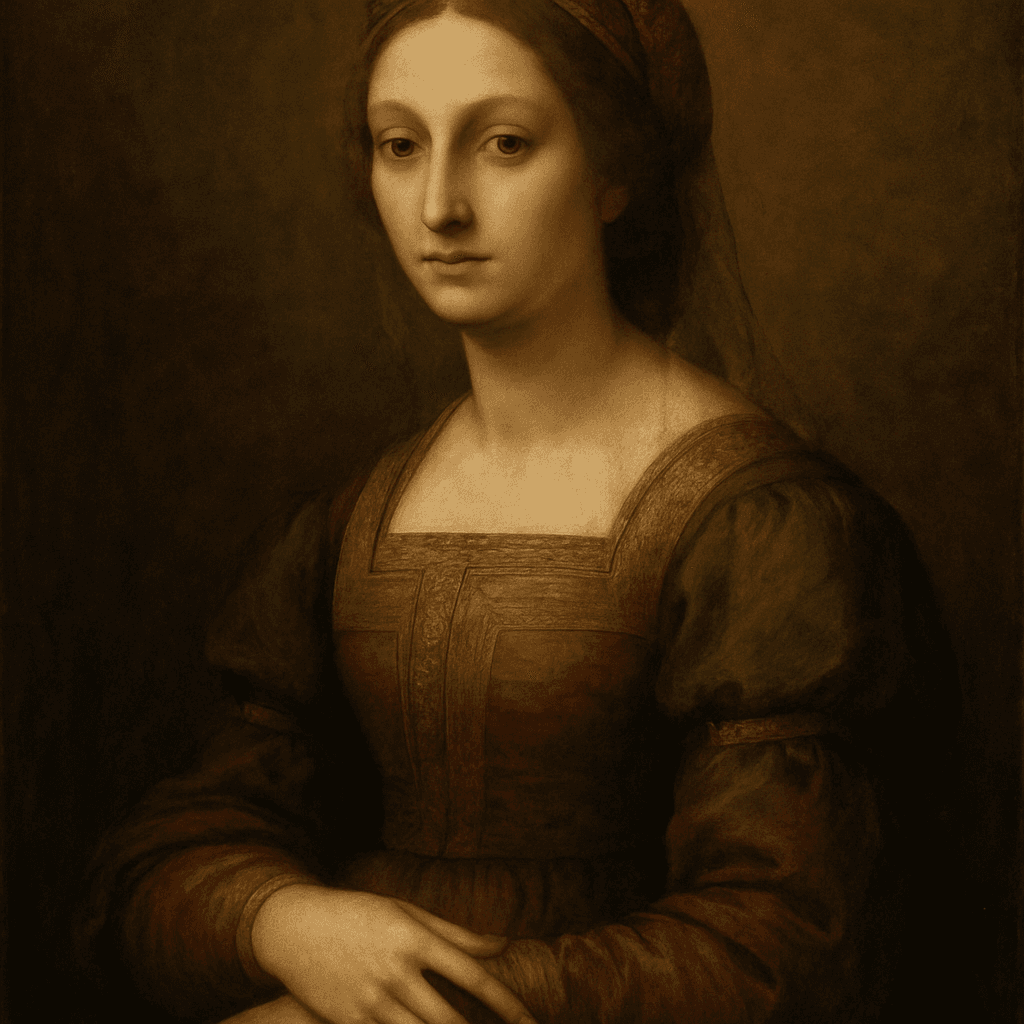
Renaissance style — sfumato, Flemish color depth
The Oil Painting Aesthetic
Oil painting has a visual language that took centuries to develop — a set of conventions and techniques refined by the Old Masters and still instantly recognizable today. The AI captures each of the defining characteristics that make a classical oil portrait unmistakably what it is:
- Rich deep colors. Oil paint has an inherent luminosity that no other medium quite matches — colors appear to glow from within, dense and saturated without looking flat or digital. The AI replicates this quality by deepening and warming the color palette, giving skin tones the amber, umber, and ochre richness characteristic of Old Master portraiture.
- Impasto brushwork. Impasto is the technique of applying paint thickly so the brushstrokes are visible as physical texture on the canvas surface. In a genuine oil painting, you can see where the brush loaded with paint and dragged across the canvas, where the palette knife built up a ridge of color. The AI renders this texture faithfully — particularly in highlighted areas and hair, where impasto is most dramatic.
- Chiaroscuro lighting. Chiaroscuro — from the Italian for “light-dark” — is the technique of using strong contrast between illuminated and shadowed areas to model three-dimensional form. Rembrandt elevated this technique to its highest expression: a face emerging from deep shadow, lit by a single warm light source, with the transition between light and dark doing all the work of conveying depth and volume. The AI applies this principle to every portrait.
- Dark atmospheric background. In Old Master portraiture, the background is rarely a neutral grey or a detailed scene — it is a deep, dark, slightly warm atmospheric field that makes the illuminated subject emerge from shadow. This convention is so strongly associated with classical oil portraits that the AI applies it by default, even when the original photo has a bright or complex background.
- Rembrandt-like gravitas. The cumulative effect of these choices — the rich color, the impasto texture, the chiaroscuro lighting, the dark background — is a quality of seriousness and permanence that oil portraits carry and photographs rarely achieve. The subject looks important. The portrait looks like it was worth commissioning. This is the quality that makes oil painting the choice for executive portraits, memorial commissions, and milestone gifts.
Perfect Gift Ideas
A custom oil painting portrait is the most impressive personalized gift you can give — it transforms an ordinary photo into something that looks like a commissioned work of fine art. Here are the occasions where oil painting portraits make the most powerful impact:
- Milestone birthday portraits. A 50th, 60th, or 70th birthday portrait rendered in the style of an Old Master is a gift with genuine weight. It communicates not just “happy birthday” but “your life has been significant enough to commemorate in the most permanent art form.” Printed large and framed, it becomes a centerpiece of a home.
- Retirement gifts. Oil painting portraits have a long tradition as retirement tributes — the formal, dignified quality of the medium suits the gravity of the occasion. A portrait of someone at the peak of their career, rendered in the style of a Dutch Golden Age commission, is an extraordinary way to mark the transition.
- Anniversary presents. A couple portrait in the oil painting style — whether from a wedding photo, an anniversary snapshot, or a recent photo — has a timeless, romantic quality that a standard print cannot match. The dark, atmospheric background and warm lighting give couple portraits an intimacy and permanence that suits the occasion.
- Memorial portraits. Oil painting has historically been the medium of memorial commissions — portraits created to honor and remember someone. The gravitas and permanence of the style make it particularly appropriate for memorializing a person who has passed. A memorial oil portrait is something a family will keep and pass down.
- Executive portraits for offices. The oil painting style is the traditional choice for corporate and institutional portrait commissions — board members, executives, founders, and distinguished alumni are all conventionally commemorated in oil. An AI-generated oil portrait has all the visual authority of a commissioned work at a fraction of the cost and time.
Other Classical Art Styles
Oil painting sits at the most formal and imposing end of MiniFigureAI's style range. For a different take on the same portrait, these styles offer their own distinct classical aesthetics:
- Renaissance — sfumato shading, Flemish color depth, the formal gravity of a 15th-century commission. Renaissance and oil painting are the two closest styles in spirit, but Renaissance leans into the cooler, more sculptural quality of Italian and Flemish masters — Leonardo, Raphael, Jan van Eyck — rather than the warmer, more atmospheric Dutch Golden Age of Rembrandt. If you want classical fine art without the dramatic chiaroscuro, Renaissance is the natural alternative.
- Watercolor — light, translucent, warm. The stylistic opposite of oil painting in almost every respect: soft color blooming rather than dense impasto, airy palette rather than rich deep tones, impressionistic rather than imposing. Where oil painting commands a room, watercolor invites you in. Both are traditional art forms — just at opposite ends of the spectrum.
- Pop Art — bold outlines, flat color fields, Warhol-inspired graphic energy. Pop Art is the deliberate antithesis of everything oil painting represents — irreverent, graphic, designed to provoke rather than impose. If oil painting is Rembrandt, Pop Art is Warhol, and the same portrait occupies a completely different cultural register in each style.
Browse all available styles on the MiniFigureAI home page — the style gallery shows sample outputs for every option so you can compare the full range before uploading your photo.
Frequently Asked Questions
Is the oil painting portrait generator free?
Yes — your first avatar on MiniFigureAI is completely free with no account or credit card required. The oil painting style is available on the free tier alongside all other styles. When you create a free account, you receive additional credits for further generations.
What resolution is the output — can I print it at large sizes?
MiniFigureAI generates high-resolution PNG files suitable for printing. The output is sharp enough for framed prints up to 8×10 inches at standard print resolution, and performs well on canvas prints, fine art paper, and large-format prints. The oil painting style is particularly well-suited to canvas printing — the impasto texture and rich colors translate beautifully to canvas and can look genuinely indistinguishable from a hand-painted original.
How realistic does the AI oil painting look?
The oil painting style produces results that closely replicate the visual qualities of a hand-painted Old Master portrait — rich impasto brushwork, dramatic chiaroscuro lighting, deep luminous color, and a dark atmospheric background. Facial features and key details are preserved so the portrait remains recognizably the subject. Most people find the results genuinely museum-quality at normal viewing distance, particularly when printed on canvas.
Does it work with old or scanned photos?
Yes — the oil painting style is particularly well-suited to older or scanned photographs. The rich, deep quality of the oil painting treatment can actually elevate a lower-contrast or slightly faded photo, and the dark atmospheric background masks any background imperfections from the original. Black-and-white or sepia photos work too: the AI applies the characteristic warm color palette of Old Master oils regardless of whether the source photo is in color.
What's the difference between oil painting and watercolor styles?
Oil painting and watercolor are both traditional art forms but with opposite visual characters. Oil painting is dense, rich, and imposing — deep color, visible impasto texture, dramatic chiaroscuro lighting, dark atmospheric backgrounds. The overall feeling is formal, permanent, and authoritative: it looks like it belongs in a museum. Watercolor is light, translucent, and warm — soft color blooming, delicate brushstrokes, airy palette. The overall feeling is intimate and impressionistic. Both are available on MiniFigureAI, and generating both from the same photo is the best way to see which treatment suits your portrait.
Create Your Oil Painting Portrait
Upload your photo and get a museum-quality oil painting portrait in under 60 seconds. Rich deep colors, impasto brushwork, dramatic chiaroscuro — free to try, no account required.
Create Your Oil Painting PortraitNo credit card required · First avatar is free
MiniFigureAI is an independent product and is not affiliated with, endorsed by, or sponsored by LEGO Group, Disney, Pixar, Lucasfilm, Nintendo, Mojang Studios, Marvel, DC Comics, Studio Ghibli, or any other brand mentioned on this page. All trademarks belong to their respective owners. Avatars are AI-generated artwork inspired by popular art styles.